


 русский
 Español
 عربى
عربى Türk
Türk
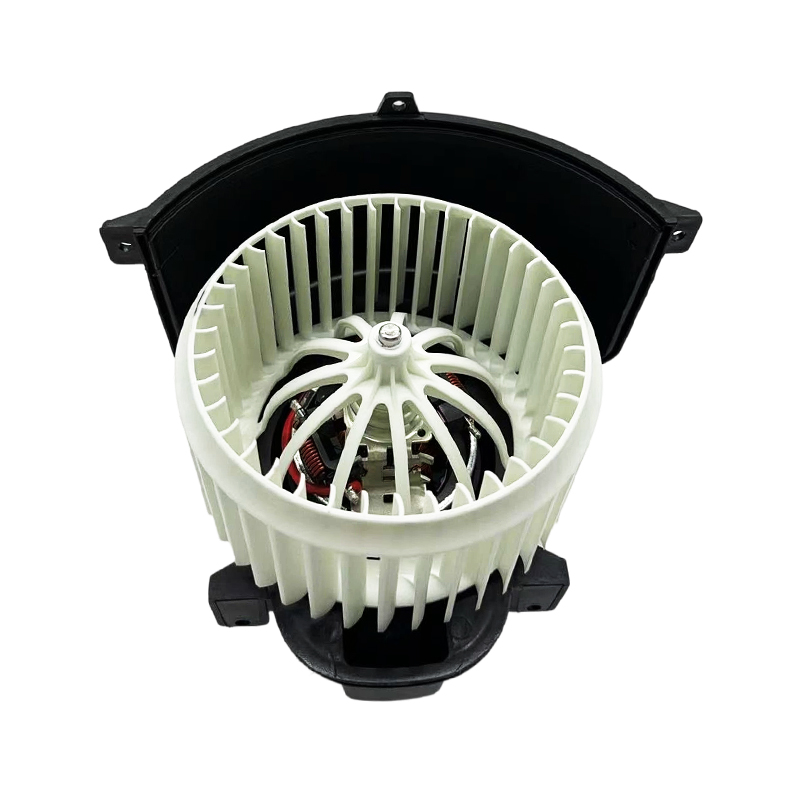
A modern air conditioning blower motor for the 2013 and later generation Ford Ranger. Built to exacting original equipment specifications (OEM No. No. 264457, RC.530.136), this motor is designed to me...
See DetailsHow Automotive Blower Motor Technology Impacts Driving Comfort?
Published on 06 18, 2026
Content
- 1 The Direct Link Between Blower Motor Technology and Cabin Comfort
- 2 From Brushed to Brushless: The Technological Evolution
- 3 NVH Reduction: The Core of Acoustic Comfort
- 4 Airflow Dynamics and Thermal Consistency
- 5 Control Strategies: PWM Modulation and Soft-Starting
- 6 Comparative Overview: Brushed vs. Brushless Technology
- 7 The Technical Flow: From Power Input to Cabin Airflow
- 8 Frequently Asked Questions (FAQ)
- 8.1 Why does a BLDC motor generate less noise than a brushed motor?
- 8.2 What is PWM control, and how does it improve comfort?
- 8.3 How does blower motor imbalance affect driving comfort?
- 8.4 Can the blower motor affect windshield defogging performance?
- 8.5 Do electric vehicles have different requirements for blower motors?
The impact of automotive blower motor technology on driving comfort is direct and measurable: advanced brushless DC (BLDC) motors, combined with precision PWM control and optimized acoustic design, can reduce cabin noise by up to 2 dB(A) and tactile vibration by approximately 20 dB, while delivering efficiency exceeding 80% and service life beyond 10,000 hours. These technological advancements transform the blower motor from a simple airflow device into a sophisticated component that fundamentally shapes the in-cabin experience.
The Direct Link Between Blower Motor Technology and Cabin Comfort
The automotive blower motor is the heart of the vehicle's HVAC system, responsible for drawing ambient air through the cabin air filter and pushing it across the evaporator and heater core before distributing it through the ductwork to the vents. Its performance directly determines three critical comfort dimensions: acoustic environment, thermal consistency, and airflow quality.
Expectations regarding energy efficiency, thermal comfort, and acoustic comfort are increasingly important in the automotive industry. As vehicles become quieter—particularly with the rise of electric vehicles—the blower motor's contribution to the overall cabin soundscape becomes more pronounced. A blower motor that operates noisily or produces objectionable vibration can undermine the perceived quality of an otherwise refined vehicle.
From Brushed to Brushless: The Technological Evolution
The fundamental shift from brushed DC motors to brushless DC (BLDC) motors represents the most significant technological advancement in automotive blower motor design. This transition addresses the inherent limitations of brushed motor technology.
Brushed DC Motors: The Legacy Technology
Brushed DC motors have been used in automotive applications for decades. They operate using physical brushes and a commutator to pass current through the motor rotor. However, this mechanical contact introduces several comfort-compromising characteristics:
- Friction-induced noise from sliding brush contacts
- Mechanical vibration that transmits through the vehicle structure
- Electrical noise and electromagnetic interference from brush arcing
- Limited peak efficiency due to frictional energy losses as heat
- Wear-related degradation with a typical operating life of approximately 3,000 hours under specified test conditions
Brushless DC Motors: The Comfort-Enabling Technology
BLDC motors, also known as electronically commutated motors, use a microcontroller to charge electromagnets on the stator, turning the rotor without physical contact. This design eliminates the primary sources of mechanical noise and vibration found in brushed motors.
The comfort and performance advantages are substantial, with efficiency ratings consistently exceeding 80% across a wide operating range, compared to approximately 60-70% for brushed equivalents. This efficiency translates to reduced heat generation and more precise speed control, directly enhancing the cabin environment.
NVH Reduction: The Core of Acoustic Comfort
Noise, Vibration, and Harshness (NVH) engineering is central to blower motor development. The motor's contribution to cabin noise is evaluated through both airborne noise (audible sound) and structure-borne noise (vibration transmitted through the dashboard and ducts).
Modern BLDC blower motors incorporate several design features that collectively deliver superior acoustic performance:
- Dynamic balancing of the rotor and fan impeller to within 0.5 g·mm precision, reducing fundamental rotational vibration
- Sinusoidal commutation waveforms that eliminate torque ripple, a primary source of electromagnetic noise
- Optimized magnet arc geometry that reduces cogging torque by up to 30%
- Isolated mounting systems with elastomeric damping elements that decouple motor vibration from the HVAC housing
The cumulative effect of these measures is remarkable. At the most sensitive operating speeds (typically 2,000–3,000 RPM), a well-engineered BLDC system achieves a noise reduction of 2 dB(A) or more compared to a brushed motor, which corresponds to a perceived loudness reduction of approximately 15-20%. Simultaneously, tactile vibration at the dashboard surface can be suppressed by up to 20 dB, eliminating the "buzzing" sensation that customers often associate with poor build quality.
Airflow Dynamics and Thermal Consistency
Beyond noise, blower motor technology directly determines the uniformity and responsiveness of cabin temperature control. The relationship between motor speed, airflow volume, and pressure distribution across the HVAC system is governed by the fan's performance curve.
A key technical parameter is the system impedance curve. The blower motor must overcome the pressure drop created by the cabin air filter, evaporator core, heater core, and ducting. At a given voltage, the motor operates at the intersection of its fan curve and the system impedance curve. BLDC motors, with their flat torque-speed characteristics, maintain stable airflow even as system resistance increases due to filter loading. This ensures that airflow volume remains within ±5% of the target value across a 12-16V voltage range, providing consistent defrosting performance and cabin temperature stability.
Furthermore, the wide speed range of BLDC motors (typically 500–6,000 RPM) allows for a linear relationship between control signal and airflow. This enables the HVAC control unit to implement sophisticated temperature regulation algorithms that respond to solar load, ambient temperature, and passenger occupancy without abrupt airflow changes.
Control Strategies: PWM Modulation and Soft-Starting
The method of speed control profoundly affects both acoustic comfort and system durability. Pulse Width Modulation (PWM) has become the industry standard for BLDC blower motor control, replacing the linear voltage regulation used in brushed systems.
PWM control offers several distinct advantages:
- Minimal power loss in the control electronics, with switching efficiencies exceeding 95%
- Step-less speed variation from 5% to 100% of rated speed, eliminating audible relay clicks and step changes
- Soft-start capability that ramps the motor to target speed over 200-500 ms, preventing sudden airflow "puffs" that disturb passengers
- High-frequency switching (typically 20 kHz) that shifts the switching noise well above the human hearing range
The soft-start feature, in particular, is a major contributor to perceived comfort. By gradually increasing motor torque and speed, it eliminates the characteristic "thump" associated with relay-closed start-up and reduces mechanical stress on the bearings and impeller, contributing to the extended service life exceeding 10,000 hours.
Comparative Overview: Brushed vs. Brushless Technology
The following table summarizes the key technical differentiators that impact driving comfort and system reliability:
| Parameter | Brushed DC Motor | Brushless DC Motor (BLDC) |
| Typical Efficiency | 60% – 70% | > 80% |
| Noise Level (1m distance) | Baseline (≈60 dB@3kRPM) | 2 dB(A) reduction achievable |
| Vibration Level | Baseline | Up to 20 dB reduction |
| Control Linearity | Non-linear / Stepped | Linear / Step-less |
| Service Life (Typical) | ~3,000 hours | > 10,000 hours |
| EMC/EMI Performance | High brush arcing noise | Low EMI (shielded) |
The Technical Flow: From Power Input to Cabin Airflow
Understanding the signal and power flow within a modern BLDC blower motor system illustrates how each technological element contributes to the final comfort outcome:
- Battery Supply (12V)
- →
- PWM Controller (20kHz)
- →
- Stator Commutation
- →
- Rotor Rotation (500-6k RPM)
- →
- Centrifugal Impeller
- →
- HVAC Duct Distribution
- →
- Cabin Comfort
Frequently Asked Questions (FAQ)
Why does a BLDC motor generate less noise than a brushed motor?
The primary noise sources in a brushed motor are mechanical friction and electrical arcing between the brushes and commutator, along with torque ripple caused by the discontinuous commutation. BLDC motors eliminate these entirely through electronic commutation and optimized winding designs, reducing both airborne noise and structure-borne vibration.
What is PWM control, and how does it improve comfort?
Pulse Width Modulation (PWM) is a method of rapidly switching the motor supply voltage on and off at a high frequency (typically 20 kHz) to control average power and speed. It enables step-less speed adjustment without the audible relay clicks or voltage drops associated with linear regulators, ensuring smooth and silent speed transitions.
How does blower motor imbalance affect driving comfort?
Even a small imbalance in the rotor or impeller (greater than 1 g·mm) generates a rotational vibration at the motor's fundamental frequency. This vibration travels through the dashboard and HVAC ducts, creating audible "drone" and tactile buzzing. Precision dynamic balancing, targeting less than 0.5 g·mm, is essential for eliminating this effect.
Can the blower motor affect windshield defogging performance?
Absolutely. Defogging relies on rapid and consistent airflow across the windshield surface. A motor with poor speed regulation or high torque ripple can cause fluctuating airflow, leading to uneven defogging. A BLDC motor's ±5% airflow stability ensures consistent air velocity, clearing condensation faster and more uniformly.
Do electric vehicles have different requirements for blower motors?
Yes. With the absence of engine noise in EVs, the blower motor becomes one of the dominant noise sources inside the cabin. Consequently, EV blower motors demand even stricter acoustic specifications, often requiring additional sound-absorbing housings and ultra-quiet bearing technologies to maintain a premium cabin atmosphere.
Related products
-
-
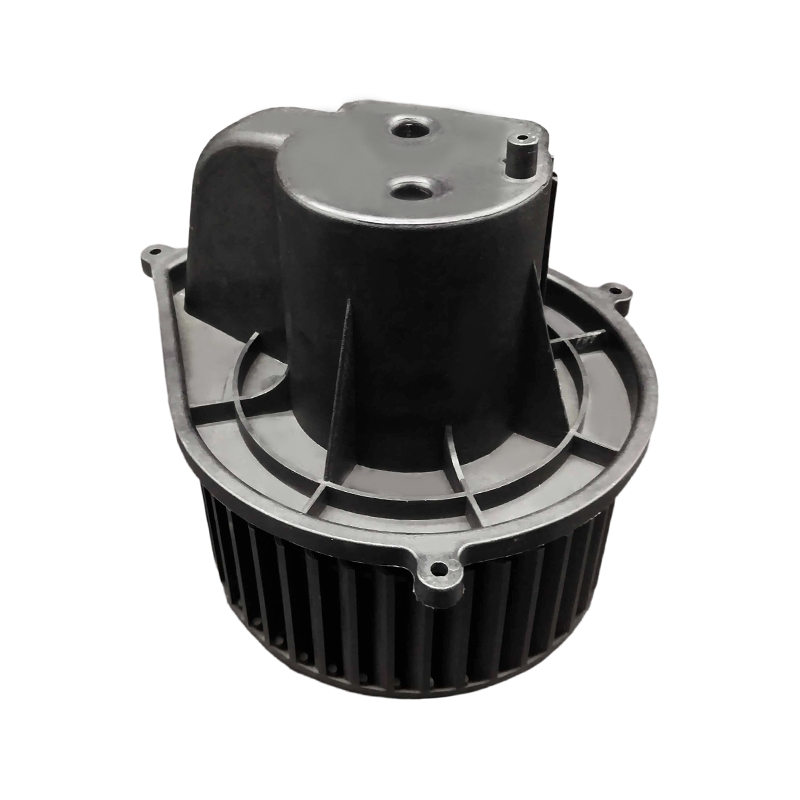
A precision replacement blower for 2006-2008 Fiat Ducatos. The JK-66701 adheres strictly to original equipment manufacturer specifications (OEM No.: 46722992), ensuring perfect compatibility with the ...
See Details -
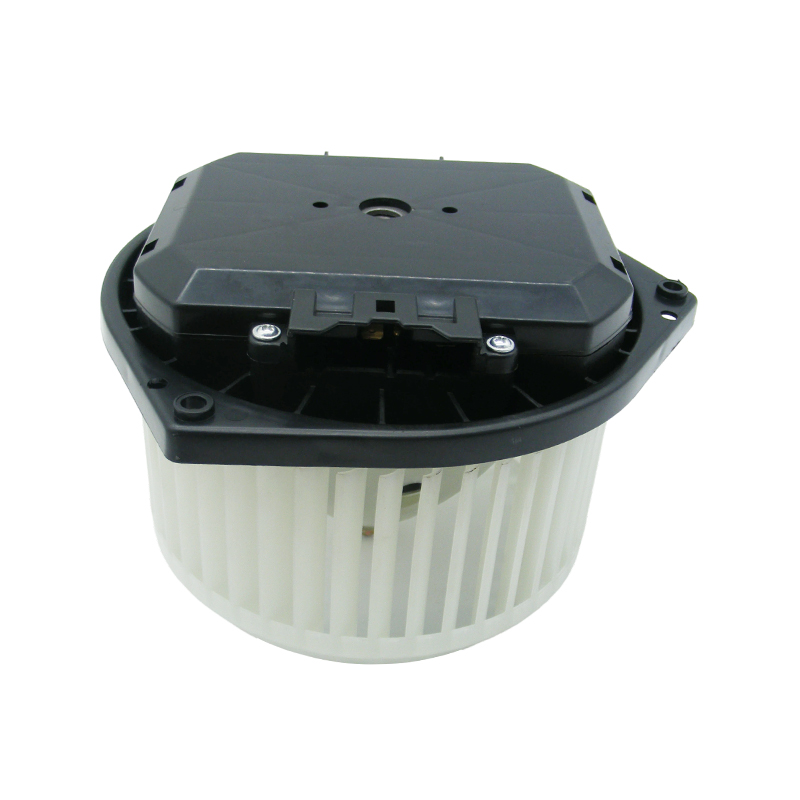
To meet the luxury brand's demand for higher levels of quietness and performance, the JK-66901F blower motor is specifically designed for the Infiniti EX35 and Q50 models. It adheres strictly to origi...
See Details -
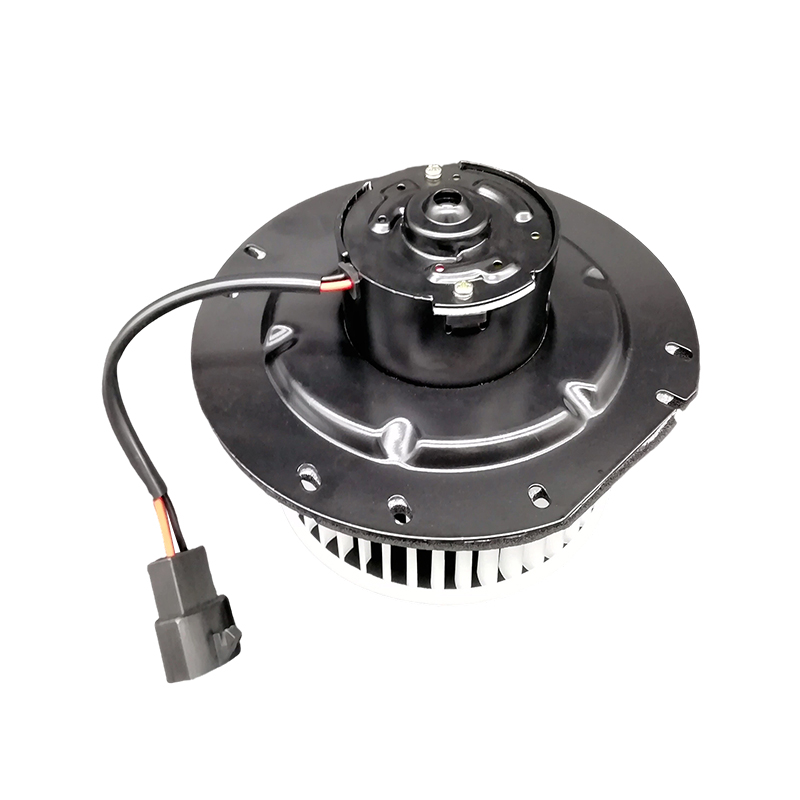
This custom blower motor is specifically designed for the 1998-2011 Ford Ranger pickup truck. Its core dimensions are 157x75 mm, and it features a clockwise (CW) rotation design, delivering performanc...
See Details -
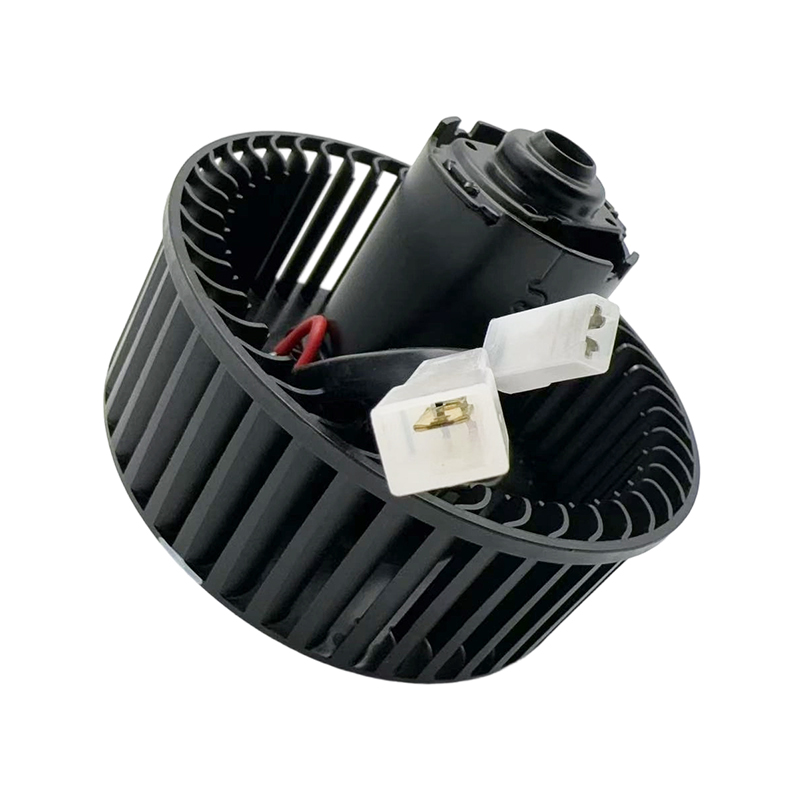
This blower assembly is specifically designed for 2009 and earlier Ford Ka and Fiesta models. As a qualified replacement for the original manufacturer's RC.530.031, it is renowned for its excellent co...
See Details -
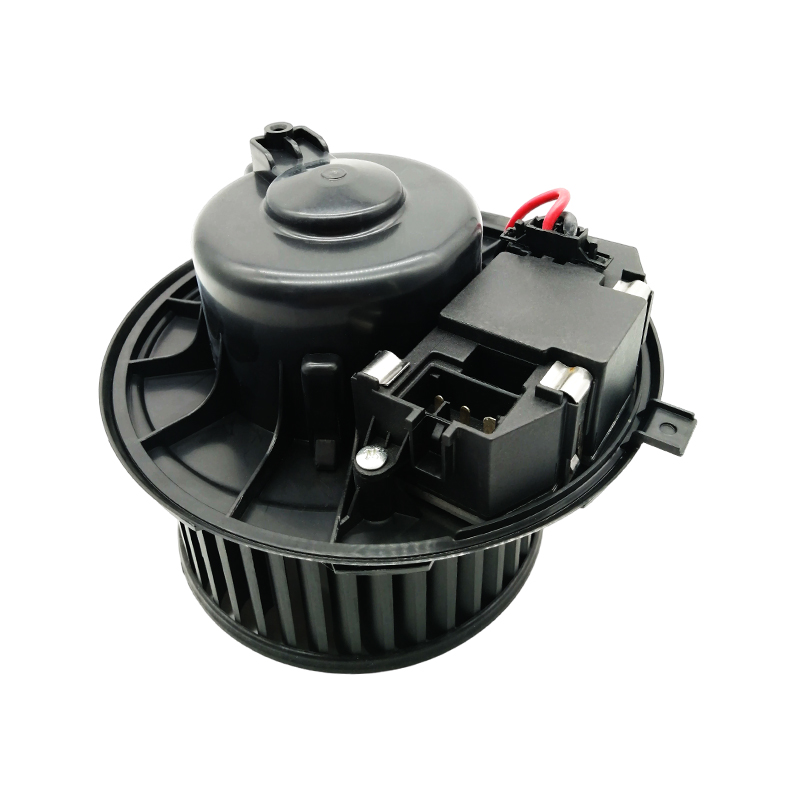
The JK-66136DZ is a blower assembly with an integrated electronic speed control module, designed specifically for popular Volkswagen Group models. It perfectly replaces the original factory part, ensu...
See Details
© 2026 Zhejiang Shuolang Motor Parts Co., Ltd. All Rights Reserved. Custom Automotive Air Conditioning Parts Manufacturer
