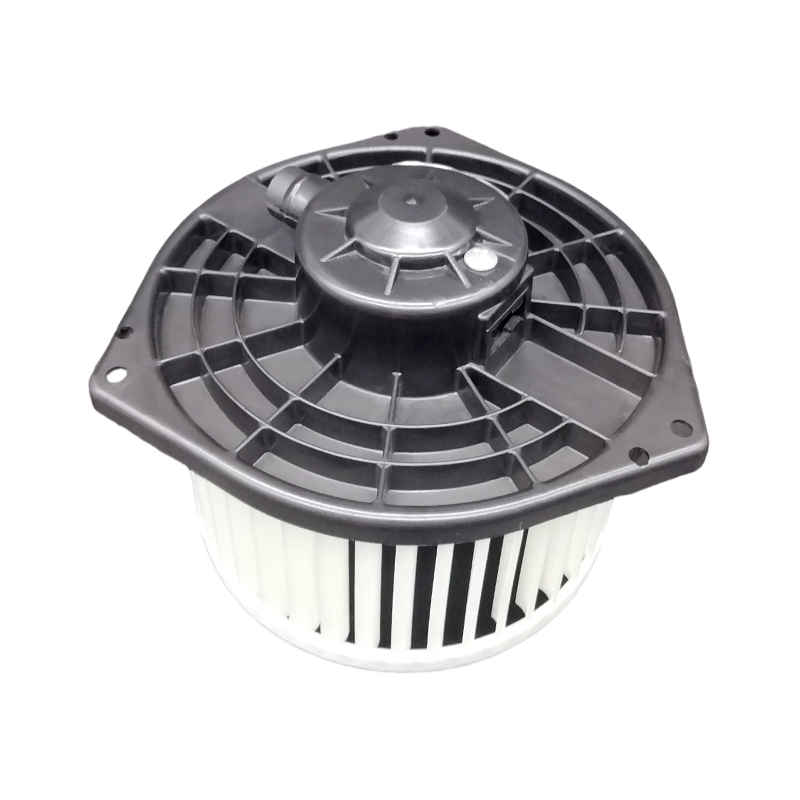
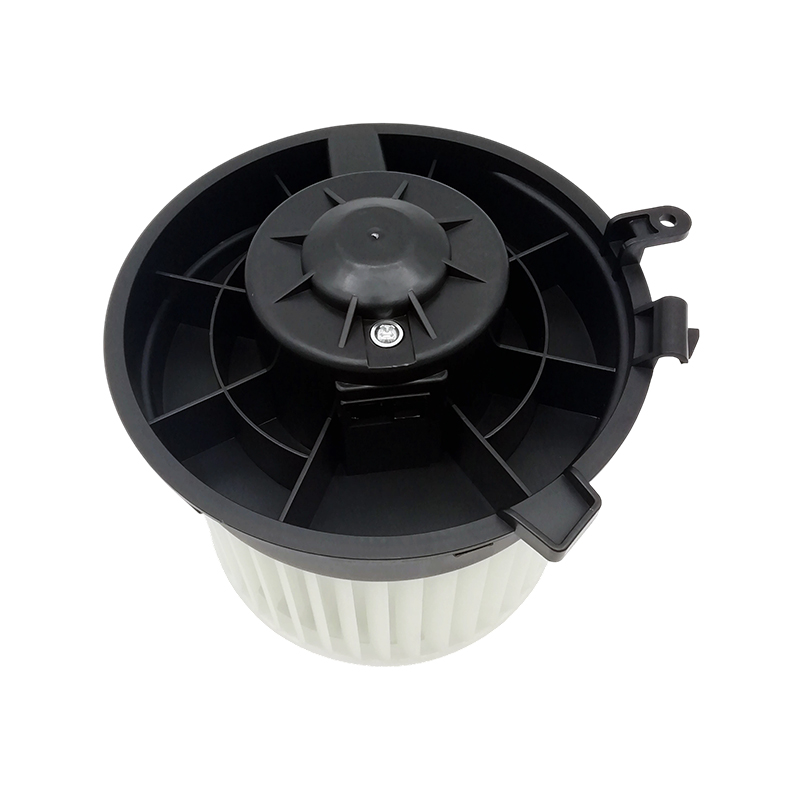
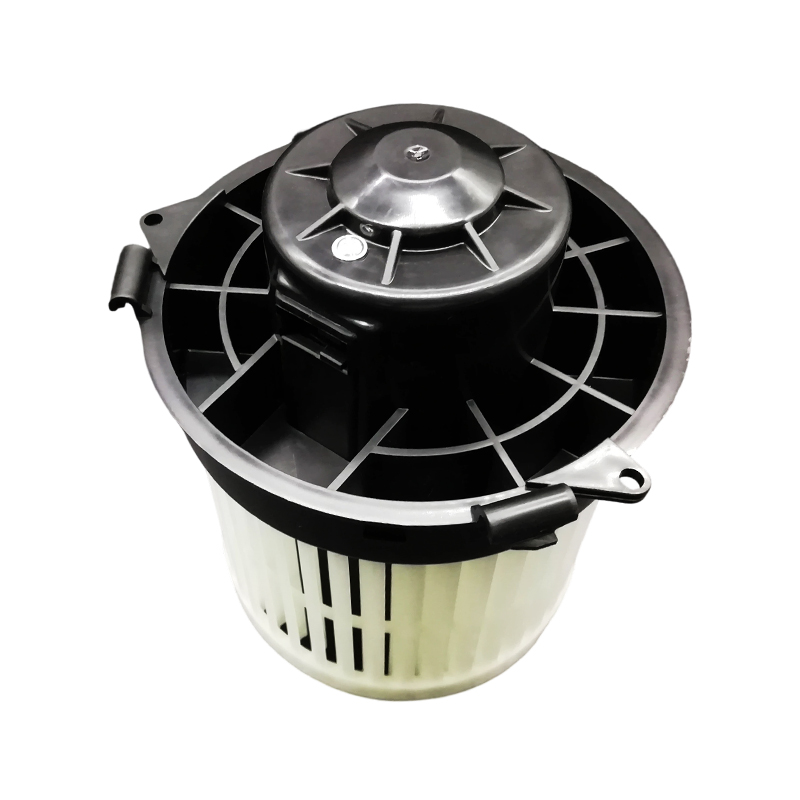
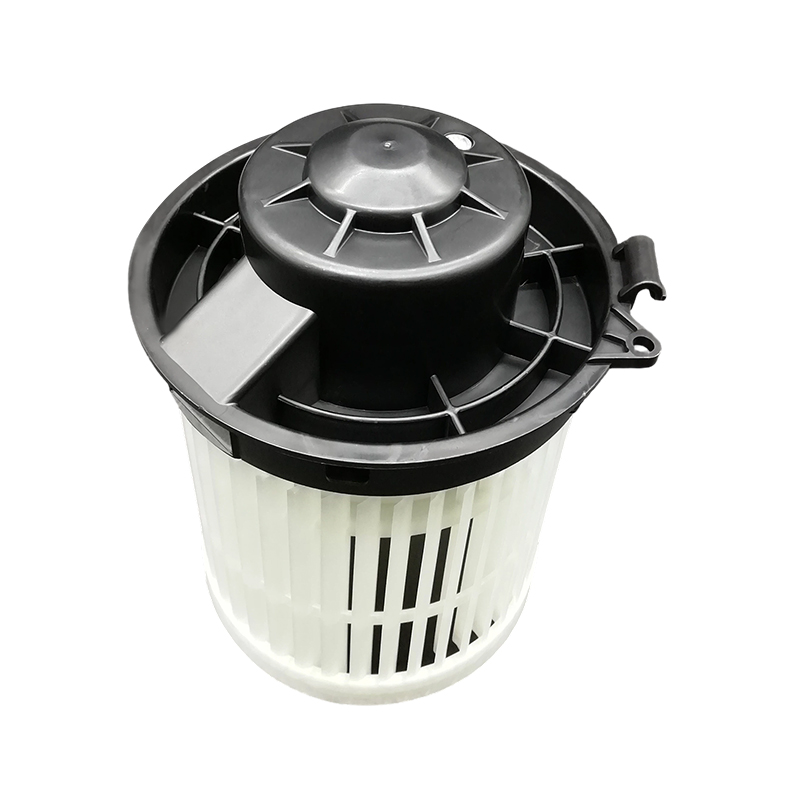
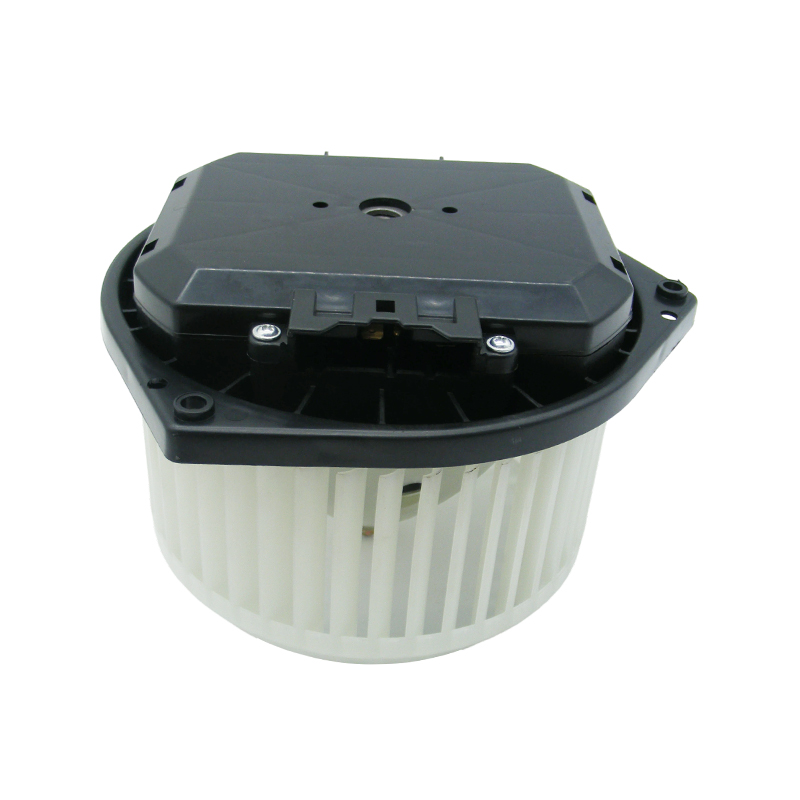
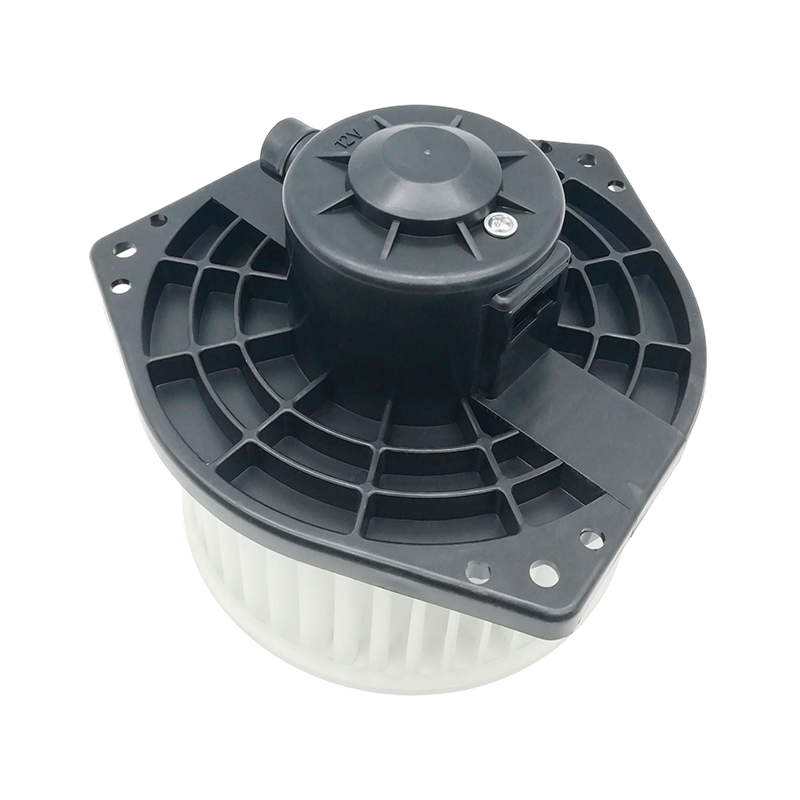
Shuolang has supplied HVAC blower components across both Nissan and Suzuki vehicle lines for years, and one pattern stands out clearly: despite the two brands' partial platform-sharing arrangements — most visible in the Suzuki Jimny/Nissan Patrol lineage and the NV200/Evalia commercial van family — their blower motor specifications rarely cross over directly. Each brand's thermal management philosophy, cabin architecture, and regional market requirements produce distinct motor configurations that must be matched precisely to avoid installation failures.
Nissan's mainstream HVAC blower design, used across the Altima, Sentra, X-Trail, Navara, and Patrol, favors a high-torque, low-noise permanent magnet DC motor with an integrated thermal cut-off fuse mounted on the motor body. This thermal fuse — rated at 77 °C or 85 °C, depending on the platform — is a first line of defense against motor runaway when the resistor block fails, and the motor receives full battery voltage continuously. Replacement units for Nissan applications must carry an equivalent thermal fuse; motors without it create a fire risk and will fail inspection in markets with strict aftermarket parts regulations.
Suzuki's compact vehicle range — Swift, Vitara, Jimny, Grand Vitara, and the S-Cross — uses physically smaller blower assemblies suited to tighter dashboard packaging. Suzuki motors in this segment are typically rated at 12 V / 14 – 18 A at maximum speed, lower than equivalent Nissan units, reflecting the smaller cabin volumes and lower static pressure requirements of the compact segment. The torque curve is tuned for quick spin-up from low speeds rather than sustained high-load operation, which changes the armature winding specification considerably from a Nissan Navara or Patrol application.
Identifying the Correct Replacement Blower Motor For Nissan Suzuki Applications
Cross-referencing a Replacement Blower Motor For Nissan Suzuki vehicles requires more than matching the OEM part number — production changes within a single model generation can introduce revised connector housings, updated impeller diameters, or modified mounting brackets that make early and late production units physically incompatible. The following parameters must all be confirmed before finalizing a replacement order.
- VIN production date and build region: Nissan's global manufacturing network — spanning Japan, Mexico, the UK, China, and India — produces vehicles with market-specific HVAC configurations. A Nissan X-Trail built for the European market uses a different blower motor assembly from the same model built for the Middle East, primarily due to differences in climate-control system capacity and electrical standards. Always confirm the vehicle's assembly plant and market destination when selecting a replacement unit.
- Manual vs. automatic climate control: Nissan's Intelligent Climate Control (ICC) system, fitted on higher Altima and Pathfinder trims, uses a PWM-controlled brushless motor that is electrically incompatible with the brush-type unit in manual-control variants of the same model. Installing a brush-type motor in an ICC-equipped vehicle will result in a non-functioning blower and an HVAC system fault code.
- Impeller retention type: Nissan uses both threaded-shaft and snap-ring impeller retention across its range. The Navara D40 and D23 platforms use a left-hand thread on the impeller nut — a detail that catches technicians unfamiliar with the application and results in damaged shafts when removal is attempted with standard tooling.
- Suzuki connector polarity: Several Suzuki blower motor connectors are non-keyed, meaning the plug physically fits in either orientation. Reversed polarity causes the motor to run backward, producing drastically reduced airflow. Confirm the connector pin assignment against the vehicle wiring diagram rather than relying on physical fit alone.
Common Failure Modes and Diagnostic Patterns Specific to These Platforms
Nissan and Suzuki blower systems share some common failure patterns with other brands, but each has platform-specific failure modes that experienced technicians and parts buyers should recognize to avoid misdiagnosis and repeat failures.
Nissan: Resistor Location and Heat Soak Failures
On Nissan Tiida, Sylphy, and Sunny platforms, the blower motor resistor is positioned directly in the airflow path on the inlet side of the evaporator box — a design intended to use recirculated cabin air to cool the resistor. When the cabin filter becomes severely clogged, airflow through the resistor drops sharply, causing it to overheat and fail within months of a motor replacement. The result is a repeat blower failure complaint where the motor is actually undamaged. Confirming filter condition and airflow path integrity before attributing a fault to the motor itself saves significant diagnostic time.
Nissan Navara / NP300: Ground Path Corrosion
The D23 Navara is widely used in agricultural and construction environments where the vehicle is regularly washed with high-pressure water. The blower motor ground stud, located on the HVAC box mounting bracket, is exposed to water ingress at the firewall seal. Oxidation at this ground point creates resistance in the motor's return path, resulting in intermittent low-speed operation and accelerated brush wear even in otherwise healthy motors. Cleaning and re-torquing the ground connection is a mandatory step in any Navara blower replacement, not an optional one.
Suzuki Jimny and Grand Vitara: Impeller Debris Ingestion
Both the JB74 Jimny and the JT Grand Vitara position the fresh air inlet low on the cowl panel, directly in line with leaf debris accumulation. Suzuki's cowl drain design in these models is prone to partial blockage, which channels standing water and decomposed organic material directly into the blower housing. The resulting impeller imbalance — caused by debris packed into the squirrel cage — produces vibration that loads the motor bearings asymmetrically and reduces service life by 40 – 60 %. Inspecting and cleaning the impeller and housing before fitting a replacement motor is essential on high-mileage Jimny and Grand Vitara units. Zhejiang Shuolang Motor Parts Co., Ltd. includes this advisory in the fitment documentation for all Suzuki replacement units we supply, reducing return rates attributable to installation environment rather than component quality.
Aftermarket Quality Standards That Matter for Nissan and Suzuki Blower Motors
The aftermarket for Nissan and Suzuki blower motors is heavily populated with components across a wide quality spectrum, particularly for high-volume models like the Nissan Tiida, Almera, and Suzuki Swift. Understanding which quality indicators predict real-world durability — rather than just passing incoming inspection — helps procurement teams select suppliers that reduce long-term warranty exposure.
- Brush grade and spring pressure: Carbon brush composition significantly affects both noise level and service life. Brushes with excessive graphite content reduce friction but wear faster under the current loads of high-speed operation; brushes that are too hard increase commutator wear. OEM-equivalent brush formulation and spring pre-load are rarely disclosed in aftermarket datasheets — requesting a sample for endurance testing before committing to volume orders is the most reliable verification method.
- Bearing specification and lubrication: Nissan and Suzuki OEM blower motors use sealed ball bearings pre-greased for the operating temperature range of the HVAC environment (typically −30 °C to +85 °C). Aftermarket units substituting sleeve bearings or open-race ball bearings with general-purpose grease show significantly higher failure rates above 60 °C ambient conditions, common in the engine bays of Navara and Grand Vitara working in hot climates.
- Thermal fuse rating accuracy: For Nissan applications requiring a body-mounted thermal fuse, the fuse trip temperature must match the OEM specification exactly. Undersized fuses trigger nuisance shutdowns on hot days; oversized fuses defeat the protection purpose entirely. Confirm the trip temperature is documented on the supplier's test certificate for every batch.
- Vibration and noise testing: Blower motor noise complaints are the leading customer satisfaction issue in HVAC aftermarket. Requiring suppliers to provide vibration data (acceleration in mm/s² at rated speed) and noise floor measurements (dB(A) at 1 m) at the specification stage filters out the lowest-quality tier before samples arrive on the bench.
Our full range of tested and application-verified units is available at Replacement Blower Motor For Nissan Suzuki, with batch documentation available on request for quality-conscious buyers and fleet procurement teams.



 русский
 Español
 عربى
عربى Türk
Türk