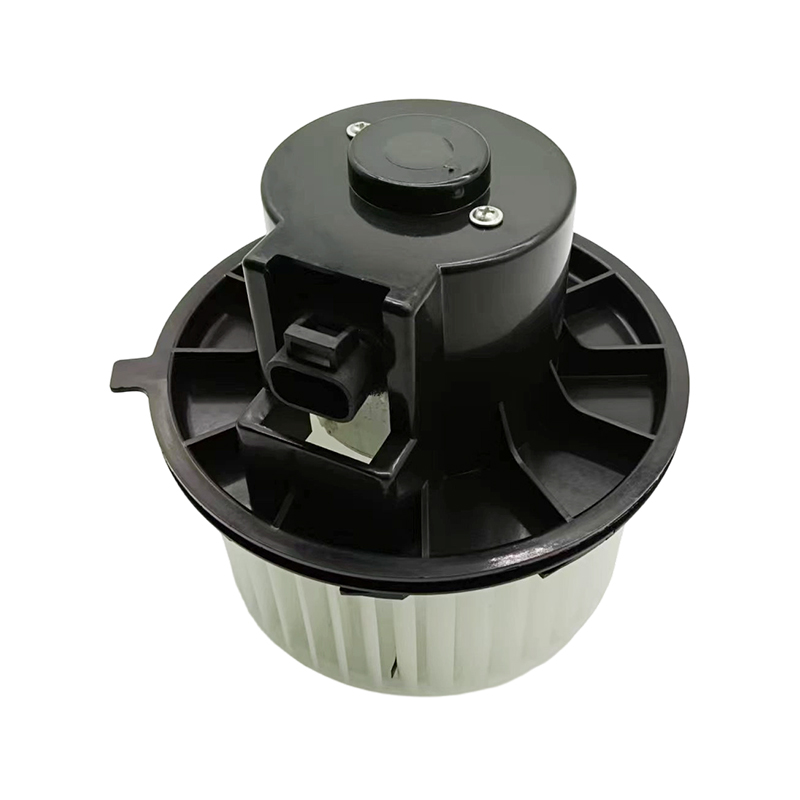
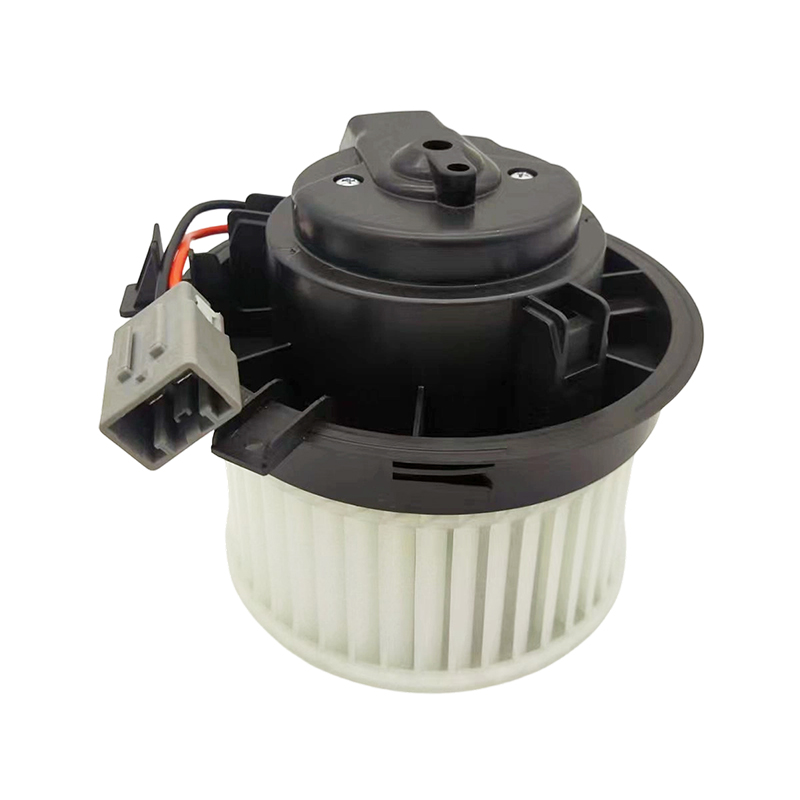
How GM's Shared HVAC Platform Creates Unique Blower Motor Considerations for Chevrolet and Buick
Zhejiang Shuolang Motor Parts Co., Ltd. has developed deep familiarity with General Motors' HVAC architecture through years of supplying blower components across both the Chevrolet and Buick marques — and the cross-brand platform strategy GM employs creates a sourcing landscape that rewards technical precision.
Chevrolet and Buick share GM's global vehicle platforms extensively: the Epsilon II underpins both the Chevrolet Malibu and Buick LaCrosse; the VSS-S architecture links the Chevrolet Trax and Buick Encore; and in China — by far the largest market for both brands — the SAIC-GM joint venture produces models like the Buick Excelle GT and Chevrolet Cruze on the same assembly lines. Despite this structural overlap, blower motor assemblies are rarely interchangeable between Chevrolet and Buick variants of the same platform. Buick's positioning as GM's near-luxury brand means its HVAC systems are consistently calibrated for lower noise output, higher maximum airflow, and more refined speed control — differences that propagate directly into the motor specification.
The most tangible expression of this difference is noise. Buick blower motor assemblies for the Enclave, GL8, and LaCrosse specify tighter dynamic balancing tolerances on the impeller — typically residual imbalance ≤ 0.3 g·cm versus the ≤ 0.8 g·cm standard acceptable in equivalent Chevrolet Malibu or Equinox units. Fitting a Chevrolet-spec motor into a Buick application produces a perceptible hum at mid-range speeds that generates immediate customer complaints, even when all electrical parameters are correct.
Speed Control Architecture Across Chevrolet and Buick HVAC Systems
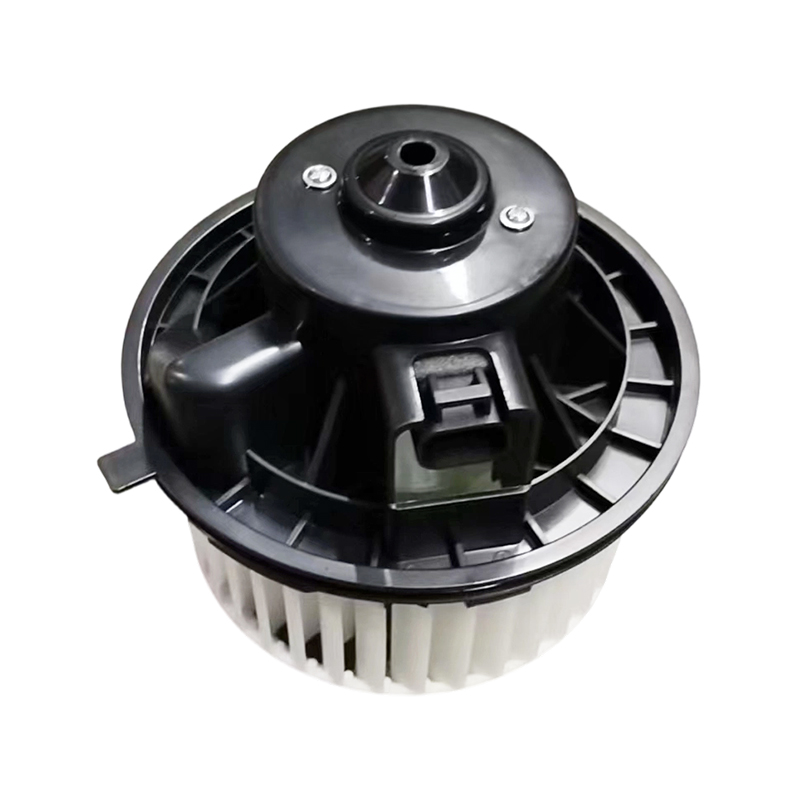
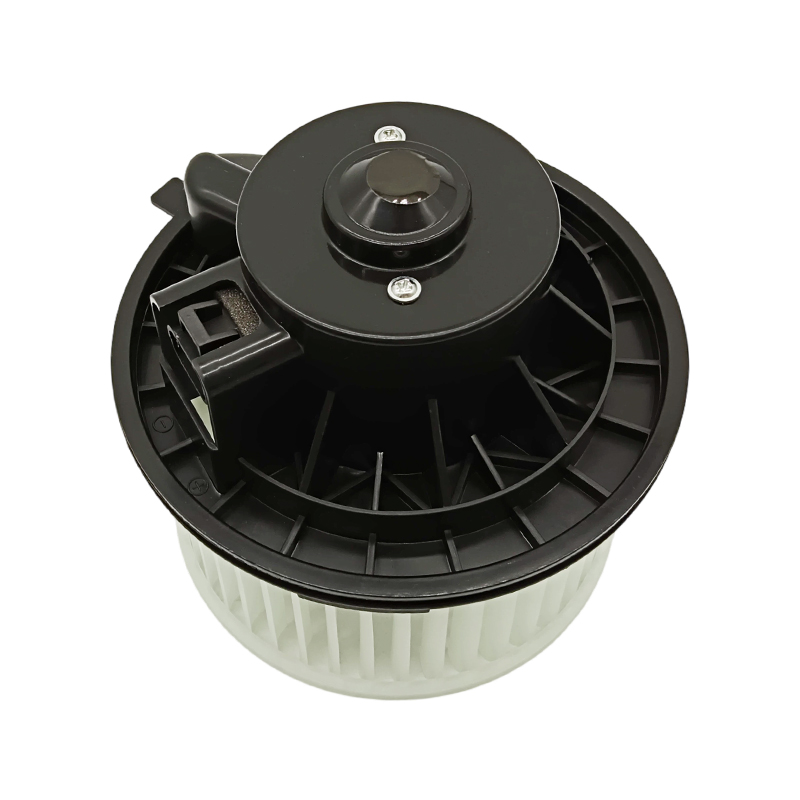
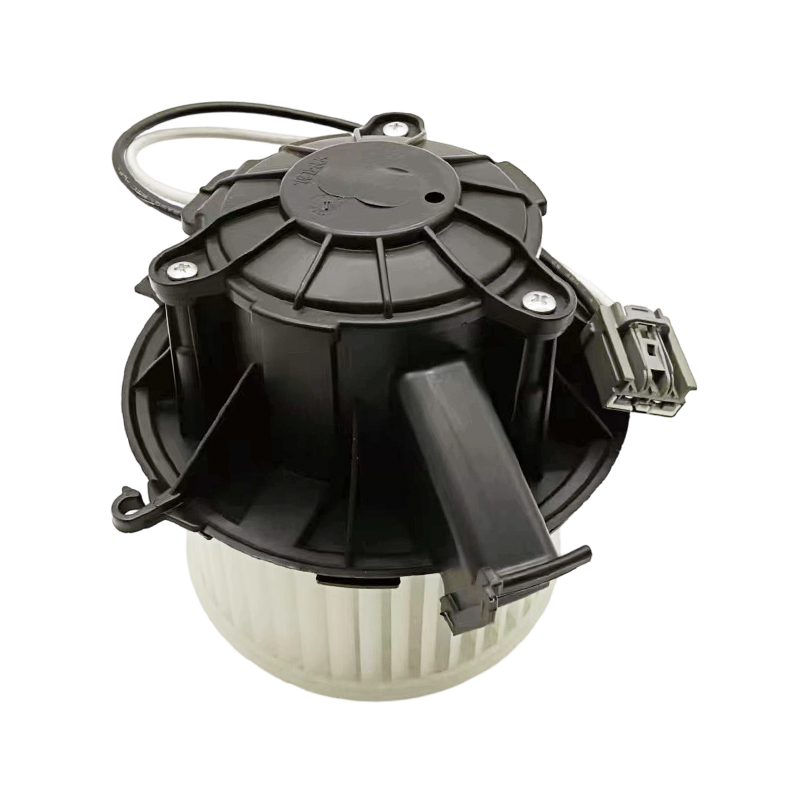
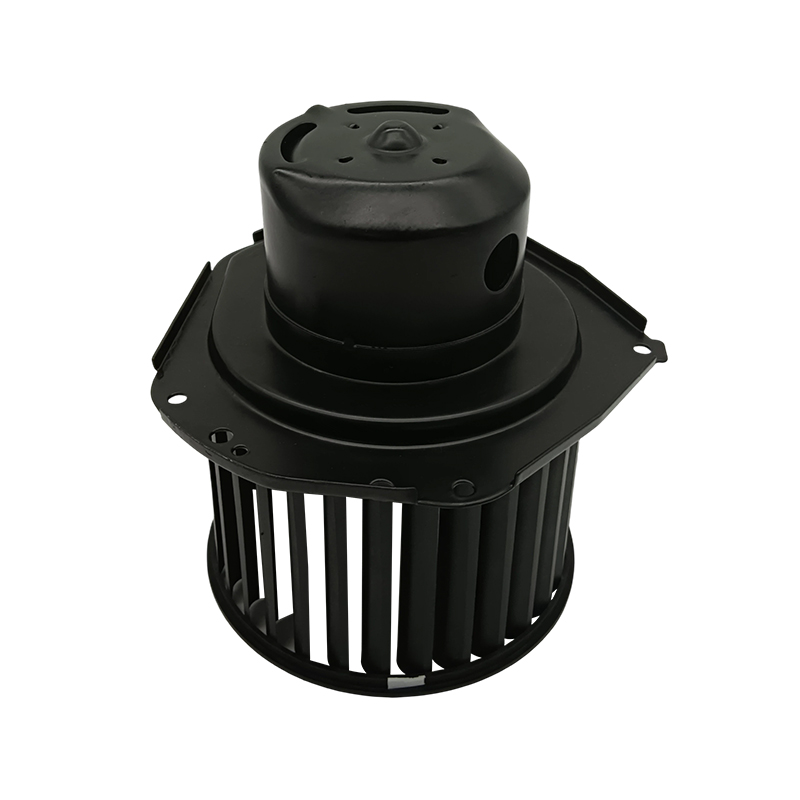
GM has deployed three distinct blower speed control architectures across its Chevrolet and Buick range over the past two decades, and all three remain active in the current global vehicle parc. Selecting a Blower Motor For Chevrolet Buick applications requires confirming which control architecture is fitted to the specific vehicle before ordering a replacement.
Resistor-Based Speed Control
Entry-level Chevrolet models — including the Spark, Sail, and base-trim Cruze — use a conventional resistor block in series with the motor to provide three or four discrete speed steps. The resistor assembly on these platforms is mounted in the blower housing outlet path, using discharge air for cooling. A key failure pattern specific to these GM applications is resistor thermal fatigue caused by recirculation mode overuse: when the vehicle is operated continuously in MAX A/C (recirculation) mode in hot climates, the resistor loses its primary cooling airflow and overheats. Technicians replacing blower motors on high-mileage Chevrolet Sail and Spark units should always inspect and test the resistor block before closing the job.
Blower Motor Control Module (BMCM) with PWM
Mid-range and higher Chevrolet models — Malibu, Equinox, Silverado — and most Buick variants use a pulse-width modulation control module that delivers infinitely variable speed between minimum and maximum. The BMCM receives a 0 – 12 V analog or digital PWM signal from the HVAC control head and adjusts motor duty cycle accordingly. A critical diagnostic point: when a PWM-controlled blower motor fails to operate at low speeds but runs normally at maximum, the fault is almost always in the BMCM or its signal wiring — not the motor. GM's GDS2 diagnostic software generates B0223, B1408, or B3765 fault codes that specifically identify BMCM faults, distinguishing them from motor armature failures.
Dual-Zone and Tri-Zone BLDC Systems
Buick Enclave, GL8 MPV, and top-trim Chevrolet Traverse and Suburban models use brushless DC motors with integrated Hall-effect position sensors feeding back to the climate control module. These systems achieve precise airflow calibration across front, rear, and third-row zones simultaneously. BLDC units for these applications are not electrically backward-compatible with brush-type motors from earlier platform generations — the control module outputs a three-phase drive signal that will not function with a DC brush motor regardless of connector adaptation.
Platform-Specific Failure Patterns Worth Knowing Before You Order
Recurring failure patterns on specific Chevrolet and Buick platforms reveal engineering vulnerabilities that informed buyers and technicians use to preempt repeat warranty claims.
Buick GL8 (ES and Pro): Dual Blower Synchronization Faults
The GL8 business MPV — dominant in China's commercial fleet market — uses separate front and rear blower motors that the climate control module runs in coordinated speed profiles. When the rear blower motor degrades and draws higher current at a given duty cycle, the control module interprets the imbalance as a system fault and reduces front blower output to compensate, resulting in insufficient cabin cooling across all zones. The complaint presents as weak overall airflow rather than a localized rear failure — a symptom profile that frequently leads to unnecessary front motor replacement. Testing both motors independently under load before diagnosis is the correct procedure for this platform.
Chevrolet Silverado and Colorado: Water Ingress at the Cowl
The fresh air inlet cowl design on both the K2 Silverado and the Colorado/Canyon pickup platform is known to accumulate debris and channel water into the blower housing when the cowl drain becomes partially blocked — a pattern amplified in vehicles operated in heavy rain or run through commercial vehicle washes. Water contact with the motor commutator accelerates brush wear dramatically and introduces corrosion into the armature winding, causing intermittent cutout under vibration. On these platforms, inspecting and cleaning the cowl drain is as important as the motor replacement itself.
Buick Encore and Chevrolet Trax: Connector Micro-Fretting
The VSS-S platform shared by the Encore and Trax routes the blower motor harness connector through a bracket that allows minor relative movement between connector and motor body under engine vibration. Over time, this produces micro-fretting corrosion at the terminal contacts — a high-resistance connection that causes voltage drop at the motor, reduced airflow at all speed settings, and eventual intermittent failure. Shuolang supplies replacement motors for this platform with a reinforced connector retention clip that eliminates the relative motion, addressing the root cause rather than just the symptom.
Selecting Aftermarket Blower Motors for GM Fleet and High-Volume Workshop Buyers
Chevrolet and Buick vehicles represent some of the highest-volume aftermarket blower motor demand globally — particularly the Chevrolet Cruze, Malibu, and Equinox in North America and Southeast Asia, and the Buick Excelle GT and GL8 in China. For fleet operators and workshop buyers sourcing at volume, the following quality benchmarks separate reliable supply partners from commodity component distributors.
- Dynamic balancing certification: Require suppliers to provide impeller balancing records to the applicable grade — G6.3 for standard Chevrolet applications, G2.5 for Buick near-luxury platforms. Balancing grade directly determines in-service vibration and bearing fatigue life, and is the single most predictive quality indicator for noise complaints.
- Salt spray resistance of connector housings: GM's global procurement standards require connector housings to pass 96-hour salt spray exposure per ASTM B117 without contact corrosion. This standard is frequently omitted from low-cost aftermarket components, leading to premature connector failure in humid or coastal operating environments.
- Endurance cycle documentation: OEM-equivalent blower motors are validated to a minimum of 1,000 on/off cycles at rated voltage and temperature before release. Request endurance test reports from any supplier offering GM-application motors below market price — abbreviated testing is the most common quality shortcut in this product category.
- Application-specific cross-reference: Given the complexity of GM's multi-platform, multi-market blower motor matrix, a reliable supplier must maintain an accurate cross-reference database linking OEM part numbers (ACDelco, Delphi) to vehicle-specific applications including build date ranges and regional variants. Errors in this database are the primary source of fitment returns in the GM aftermarket.
Our complete application-verified lineup for GM platforms is available at Blower Motor For Chevrolet Buick, with full cross-reference data and batch quality documentation provided for every order — the standard our partners have relied on throughout our decade of focused manufacturing in automotive air conditioning components.



 русский
 Español
 عربى
عربى Türk
Türk