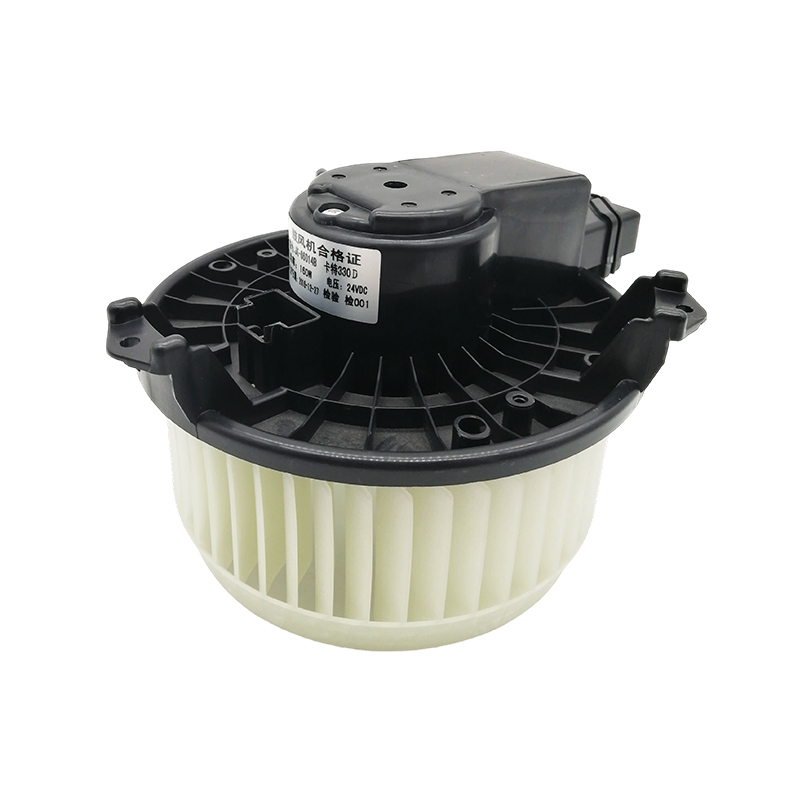
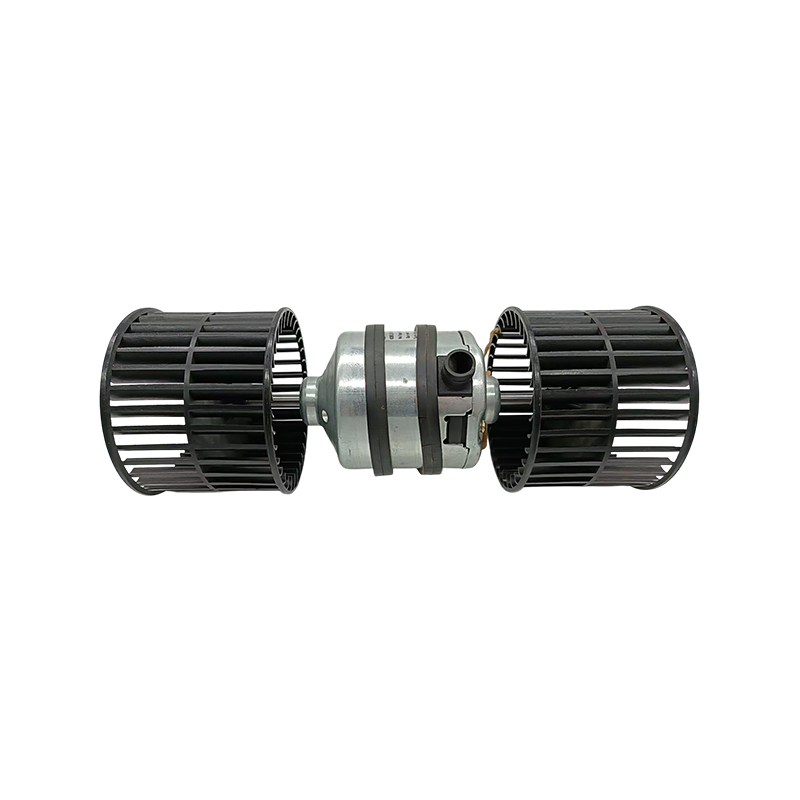
The Ultimate Guide to Choosing an OE Replacement Excavator Blower Motor
When operating heavy machinery in demanding environments, maintaining a functional and efficient cabin climate is critical for operator safety and productivity. A failing climate control system can lead to window fogging, reduced visibility, and operator fatigue. At the heart of this system lies the OE Replacement Excavator Blower Motor, a vital component designed to deliver consistent airflow for heating and cooling. Understanding the technical specifications, performance metrics, and manufacturing standards of these motors is essential for making an informed purchasing decision that ensures long-term reliability on the job site.
- Ensures optimal airflow to maintain clear visibility through defrosting and demisting functions.
- Directly impacts the operational lifespan and efficiency of the entire HVAC system.
- Manufactured to meet stringent heavy-duty vibration and dust ingress standards.
Understanding the Role of Blower Motors in Heavy Machinery
In construction and earthmoving equipment, the blower motor does much more than simply circulate air. It is the driving force that pushes conditioned air through the complex ductwork of heavy-duty cabins, overcoming the resistance of heavy-duty filters designed to block silica dust and particulate matter. Selecting a high-quality OE Replacement Excavator Blower Motor guarantees that the motor can handle these high-static-pressure environments without premature failure.
- Powers the dual-function system for both fresh air intake and interior recirculation modes.
- Must withstand extreme temperature fluctuations typical of outdoor heavy-duty operations.
- Engineered to operate continuously under severe vibration conditions unique to tracked machinery.
Key Performance Indicators for Construction Equipment
When evaluating a blower motor for excavators, standard automotive metrics are insufficient. These motors are rated by their ability to maintain torque under load and resist electrical overheating. A premium OE Replacement Excavator Blower Motor will feature high-grade copper windings and sealed ball bearings that prevent contaminants from compromising the internal mechanisms, ensuring stable RPM output even when the filter is partially clogged.
- High-torque startup capabilities to immediately move heavy volumes of air upon ignition.
- Thermal overload protection to prevent electrical shorts and potential fire hazards.
- Corrosion-resistant housing to withstand exposure to moisture, mud, and harsh chemicals.
OE Specification vs. Aftermarket Alternatives
Equipment owners and maintenance managers often face the choice between strictly adhering to original equipment specifications or opting for cheaper aftermarket alternatives. While aftermarket parts may reduce upfront costs, they frequently fail to match the precise dimensional tolerances, electrical draw characteristics, and acoustic profiles of the original design. An OE Replacement Excavator Blower Motor is reverse-engineered to match the exact physical footprint and connector types, ensuring a drop-in fit without the need for time-consuming modifications or wire splicing.
- Guarantees exact mounting alignment, preventing stress on the plastic blower housing.
- Maintains the original electrical load parameters to protect the machine's wiring harness and control modules.
- Preserves the OEM acoustic engineering, keeping cabin noise within safe decibel limits for prolonged use.
Comparative Analysis: OE vs. Standard Aftermarket
To clearly illustrate the differences in engineering and operational reliability, we have compared the attributes of an OE-specification component against a standard aftermarket alternative. This comparison highlights why professionals prioritize exact specifications for heavy machinery to minimize equipment downtime.
| Feature |
OE Specification Standard |
Standard Aftermarket |
| Bearing Type |
Sealed, dual-ball bearings |
Sleeve bearings or single-bonded seals |
| Dimensional Tolerance |
Exact match (Zero modification needed) |
Variances requiring adjustments |
| Winding Material |
100% Pure copper windings |
Copper-clad aluminum (CCA) possible |
| Vibration Resistance |
Tested for heavy-duty tracked equipment |
Designed for standard on-road vehicles |
| Thermal Protection |
Integrated auto-resetting PTC resistor |
Basic fusible link or absent |
| Expected Lifespan |
Matches or exceeds original service hours |
Shorter lifecycle, prone to early wear |
Manufacturing Excellence in Automotive Air Conditioning Parts
Producing reliable climate control components for construction machinery requires a deep integration of design, development, and rigorous testing protocols. Located in a renowned manufacturing hub for automotive air conditioning parts, our facility leverages over a decade of specialized experience to engineer solutions for buses, heavy trucks, military vehicles, and construction equipment. We do not merely supply parts; we provide comprehensive climate control solutions tailored to the specific operational demands of your machinery.
- State-of-the-art testing facilities simulating extreme temperature and vibration profiles.
- Comprehensive quality control from raw material sourcing to final product packaging.
- Advanced R&D capabilities for custom blower motor applications across various sectors.
Quality Assurance in Every Component
Every OE Replacement Excavator Blower Motor leaving our production line undergoes a stringent series of automated and manual inspections. This includes dynamic balancing to eliminate rotational vibration, high-voltage surge testing to ensure winding integrity, and exact dimensional verification using precision coordinate measuring machines. This unwavering commitment to quality control ensures that our customers receive components that perform flawlessly in the field.
- 100% end-of-line motor performance and noise level testing.
- Salt spray and humidity chamber testing for advanced corrosion validation.
- Continuous lifecycle testing to guarantee durability under heavy continuous loads.
FAQ
What are the common signs that an excavator blower motor needs replacement?
Identifying a failing motor early can prevent secondary damage to the HVAC resistor or control panel. The most prominent indicator is a noticeable reduction in airflow volume, even when the system is set to maximum speed. Operators may also hear a high-pitched squealing or grinding noise, which typically points to bearing failure. Furthermore, if the motor operates intermittently or fails to start altogether—often accompanied by a burning plastic smell—it requires immediate inspection and replacement with an OE Replacement Excavator Blower Motor to restore safe cabin conditions.
- Intermittent operation or complete failure to start regardless of fan speed settings.
- Unusual mechanical noises such as grinding, rattling, or squealing upon activation.
- Tripped electrical fuses or a burning smell indicating an internal electrical short circuit.
Can I install an excavator blower motor without modifying the existing ductwork?
Yes, absolutely. The primary advantage of sourcing an OE Replacement Excavator Blower Motor is that it is specifically designed as a direct-fit, drop-in solution. The mounting bracket locations, flange dimensions, and electrical connector interfaces are reverse-engineered to match the original equipment specifications exactly. This precision engineering eliminates the need for cutting, drilling, or fabricating custom adapters, significantly reducing installation time and labor costs while ensuring a secure, leak-free seal within the HVAC housing.
- Exact mating of OEM electrical connectors prevents the need for wire splicing or pin adjustments.
- Precise housing dimensions ensure an airtight seal, preventing conditioned air from escaping into the dash cavity.
- Pre-balanced impellers eliminate the need for field adjustments to reduce operational vibration.
How does the harsh environment of construction sites affect blower motor lifespan?
Construction sites expose machinery to extreme levels of airborne particulates, including fine silica dust, which can quickly overwhelm standard cabin air filters. When dust bypasses a clogged filter, it acts as an abrasive on the motor's internal components and bearings. Additionally, the constant, severe vibration generated by the excavator's engine and hydraulic systems places continuous stress on the motor's structural mounts and internal windings. An OE Replacement Excavator Blower Motor combats these harsh realities through heavy-duty sealed bearings, ruggedized housings, and high-grade electrical insulation specifically formulated to withstand such aggressive operational environments.
- High levels of silica dust accelerate bearing wear and cause premature mechanical seizure.
- Continuous low-frequency vibrations from hydraulic pumps can loosen internal motor windings over time.
- Extreme ambient temperatures cause thermal expansion and contraction, degrading inferior sealants and housing materials.
Why is an OE specification motor more cost-effective in the long run for heavy machinery?
While the initial purchase price of a generic aftermarket motor may seem attractive, the total cost of ownership is invariably higher. Inferior motors are prone to premature failure, resulting in costly machine downtime, expensive field service labor, and potential damage to related components like the blower resistor or control panel. By investing in an OE Replacement Excavator Blower Motor, fleet managers ensure maximum service intervals, predictable maintenance schedules, and uninterrupted operation. The precise electrical draw also protects the machine's complex wiring harness from heat damage, ultimately delivering superior value and lower lifetime operating costs.
- Drastically reduces unplanned equipment downtime associated with frequent HVAC system failures.
- Protects expensive downstream electronic control modules from voltage spikes and electrical feedback.
- Lowers total maintenance expenditure by extending the interval between major component replacements.



 русский
 Español
 عربى
عربى Türk
Türk